
Why I’m Voting For Steve Abshire For Common Pleas Judge

I’m voting for Steve Abshire for judge. I’ve been glad to get to know him over the last twenty years and I’m happy a person of his character and background is now serving as judge. He deserves the support of the public this November to continue.

Steve is 57 years old and has had a life-time of experiences that have built his character. Steve’s opponent is 41 years old. Steve has had 15 more years of dealing with the law and with serving the public than his opponent. Seasoned judges are what the system needs.

Steve and I have a special connection because we both grew up in Northridge. I graduated from Northridge High School in 1965 and Steve graduated in 1987. Some of my teachers stayed those 22 years and taught Steve too. We’ve compared notes.

Growing up in Northridge has provided Steve with the experience to understand the point of view of those struggling to get by. The direct experience, I’m sure, has made Steve a great judge.

Steve is endorsed by the Republican Party but he also is endorsed by Dayton-Miami Valley AFL-CIO, the teachers’ union , and by AFSCME Ohio Council 8 — the public-sector employees union. These unions groups usually support Democrats and with their endorsement of Steve are going against the local party. It says a lot that they chose Steve. I usually vote for all Democrats unless I have a strong reason to vote for the Republican and I have very good reasons to vote for Steve.

We need seasoned judges who have the background to relate to and understand the poor and underprivileged. Please consider this heartfelt endorsement to vote for Steve Abshire.
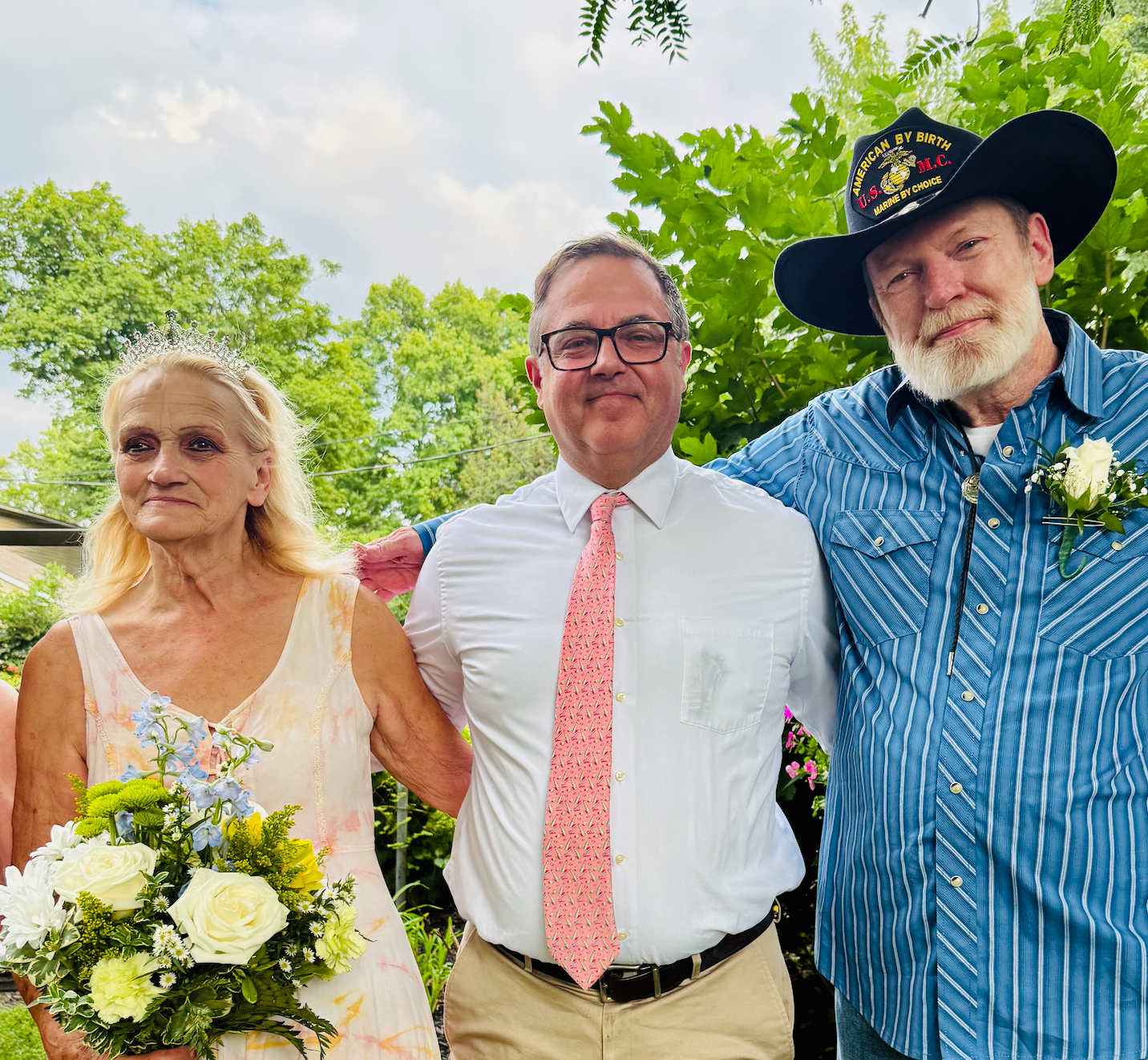
Here is Steve Abshire standing between my neighbors across the street Cathy and Ned Gelo. They had very nice wedding in their back yard and Steve did a great job officiating

This is from Steve’s Website:

After graduating from Northridge High School in Harrison Township, Steve honorably served in the United States Army during Desert Storm. Following his military service, he returned home and earned his undergraduate and master’s degrees from Wright State University using the GI Bill, before graduating from the University of Toledo College of Law.

Steve began his legal career as an Assistant Prosecutor in Montgomery County, where he handled multiple felony dockets and served as supervising attorney for the CARE House Division, working to protect vulnerable children and support families during difficult circumstances.

He later entered private practice, representing both court-appointed and private clients in juvenile and adult courts. His legal experience includes extensive litigation across civil matters such as adoptions, contract disputes, landlord-tenant issues, estate planning, probate matters, and insurance defense.

Steve is especially proud of his pro bono work assisting families in domestic relations court and supporting individuals through drug court programs.

Prior to taking the bench in Montgomery County, Steve served as a Juvenile Court Magistrate in Greene County, presiding over cases with fairness, preparation, and respect for all parties involved. His time on the bench has deepened his commitment to delivering thoughtful, well-reasoned decisions.

Judge Abshire has over 25 years of experience. He has served as a Magistrate (4 years), Private Attorney handling civil, GAL, private custody, court appointed (11 years), and Assistant Prosecuting Attorney (11 years).
Posted in Local/Metro | Comments Off on Why I’m Voting For Steve Abshire For Common Pleas Judge

A Progressive Plan For Reducing School Property Taxes In Ohio

The whole concept of public schools is a progressive idea. To pay for our schools, we need a progressive tax system.

The progressive notion that government can compel the payment of taxes to educate other people’s children was a radical idea and at one time was strongly opposed. Another progressive and radical idea was the belief that in order to have a fair tax system that could generate the needed revenue, government should have the power to tax income, and at varying rates. This idea would have been opposed by the founders, but, a progressive tax system was enshrined in our Constitution as the 16th amendment in 1913. It was initiated when our Ohio Republican President, Howard Taft, was in office. He urged congress to supply the needed 2/3rd vote.

In 2004, Ohio had a progressive state income tax system with seven brackets. The top bracket taxed income in excess of $200,000 at 7.5%. Starting in 2005, the Republican Assembly, over the years, gradually flattened this system and, since January 2026, Ohio has had a flat 2.75% income tax system. Now, 49% of the state revenue is from sales taxes and fees. Trashing the progressive income tax system and greatly increasing sales tax has made the system every more regressive — the lower a person’s income, the greater is the percentage of the income that goes to taxes.

In 2005, the bottom quintile and the top quintile of income paid about the same percentage of their incomes in taxes. By 2023 the progressive system had been largely flattened and citizens in the bottom quintile were paying about twice as much of their income as was the top quintile: 12.7% vs. 6.3%.

In Ohio, the state government provides about 34% of the needed funding for public schools. This is much less than most states provide. Ohio is about 40 out of the 50 states. The state support was 44.8% in 2002. The state failed to keep up with the increased need for addiional school funding and there was more and more pressure on school boards to beg their communities to fund the local schools by raising school property taxes.

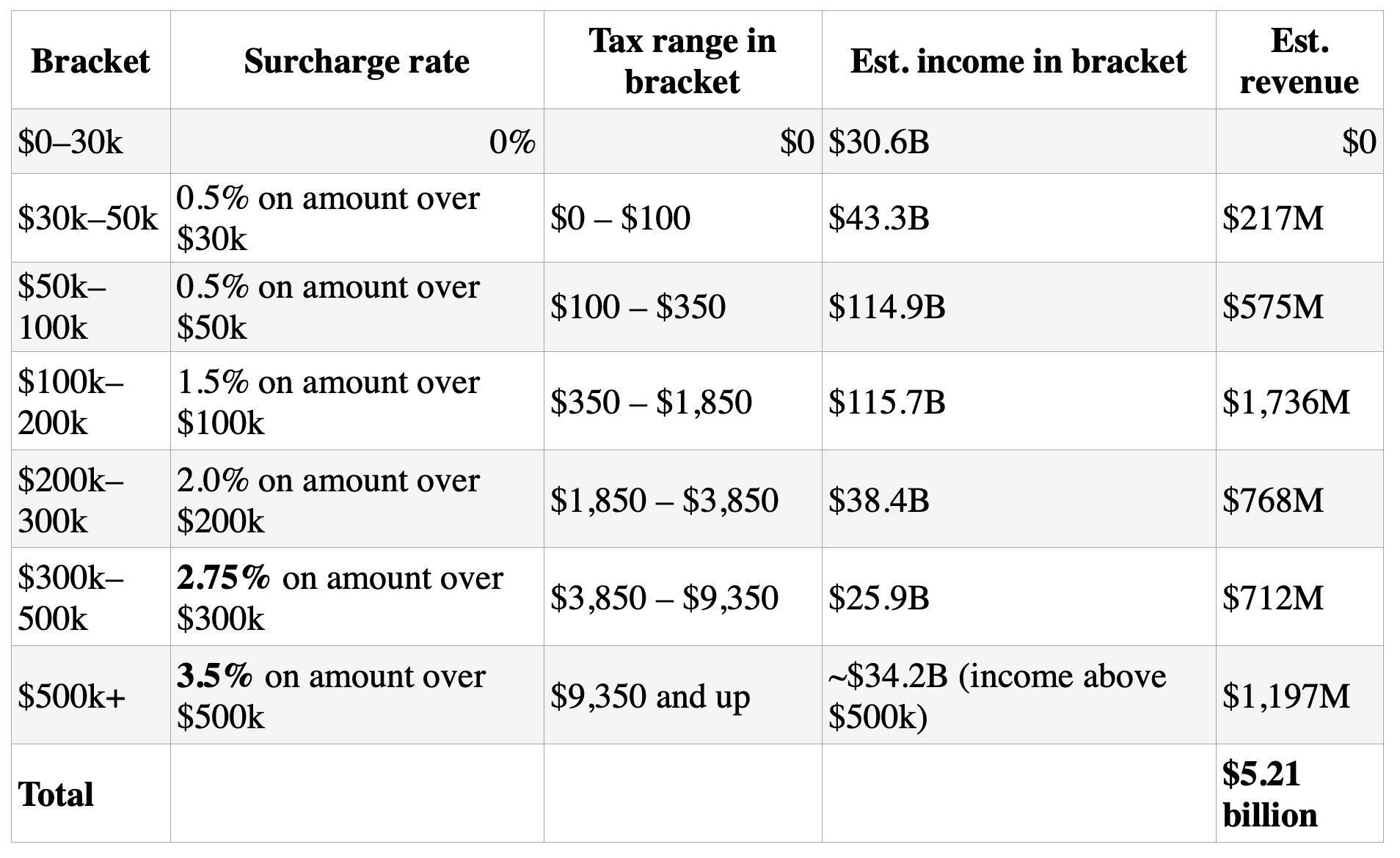
About $13.2 billion is raised each year by property taxes for the purpose of school operation; this doesn’t include building construction. The plan, I am showing here, is to implement a progressive income tax system that will raise $5.2 billion each year and to make changes in the business tax system to raise $1 billion. The idea is to use this $6.2 billion to reduce school property taxes by about one-half of what they are now.

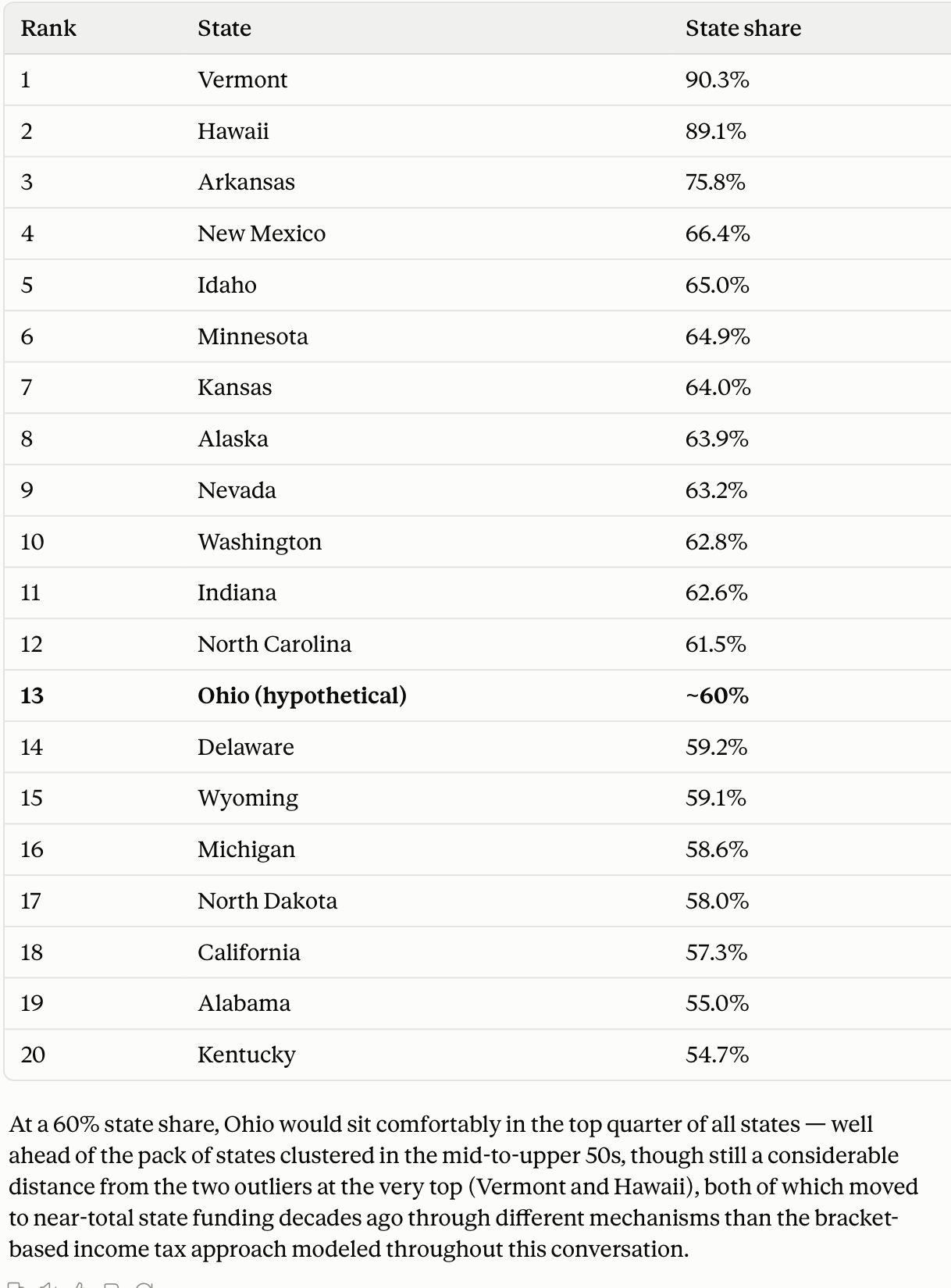
If the state Ohio would provide an additional $6.2 billion to public schools, that would make the state support at 60%. This would move Ohio from 34%, position 40, to 60%, position 13. See below.

Here is one possible chart showing a progressive system to calculate a tax surcharge. This would be an additional tax, on top of the 2.75% flat rate, just for school property tax relief. For most citizens, the increase in income tax would be more than compensated by a decrease in their property taxes.

Posted in Local/Metro | Comments Off on A Progressive Plan For Reducing School Property Taxes In Ohio

The Big Goal For MCDP Reorganization — Defeat Mike Turner And Elect Democrats In Republican Districts

At the MCDP Reorganization Meeting, scheduled for June, the newly elected Central Committee will establish the way forward for the party. Officers will be chosen and a new MCDP Constitution approved.

I am urging Reorganization to launch a two-year project to build up the organization so that is strong enough to defeat Mike Turner and defeat Republicans in the Ohio Assembly. The MCDP, historically, has put little effort and resources into these important elections and instead has focused on local races. Grassroots Democrats want much more.

To win in Republican districts, will require hundreds and thousands of engaged Democrats. Today, there are less than 100 active Central Committee members and the MCDP, as an organization, does not exist. The MCDP does not have officers or a program. It is simply a list of donors. Everything revolves around the Central Committee.

I’m proposing a new MCDP Constitution to:

  1. Define the MCDP as an organization of all MCDP members and make MCDP an active community that Democrats will want to join.
  2. Organize a “Democratic Committee” of MCDP members in each jurisdiction.
  3. Make a two-year goal to sign up 5% of registered Dems (about 2500) as members.
  4. Schedule the next Reorganization for 2028, as permitted by Ohio law.
  5. Empower the MCDP members in 2028 to directly elect its own officers by a rank-choice process, establish its own committees, hold its own meetings.
  6. Outline the relationship between the MCDP and the elected Central Committee.

Launching a two-year project to democratize the Democratic Party, I believe, would give a powerful boost to win elections that now seem out of reach. The idea is to start, immediately, a two year campaign to build MCDP membership and build grassroots infrastructure. The goal will be to help Democratic candidates in the 2026 elections — and to establish an infrastructure that will grow in strength and help develop and elect strong candidates in 2028.

There is a lot to think through and my goal is to start a discussion. There is a short time before the Reorganization Meeting to develop consensus. This is a first in a series of posts for DaytonOS to be collected as a longer paper titled, “Project 2028: A Two Year Plan To Build MCDP And To Flip Republican District”

See previous posts:


Posted in Local/Metro | Leave a comment