Nobel Laureate Joseph Stiglitz: “No Such Thing As a Free War, No Such Thing As a Free Bailout”

Joseph Stiglitz, winner of the 2001 Nobel Prize in Economics was recently interviewed by Amy Goodman of Democracy Now.  Stiglitz is a professor at Columbia University and the former chief economist at the World Bank. He is the co-author of The Three Trillion Dollar War: The True Cost of the Iraq Conflict.  (If you want to see a video presentation by Stiglitz, where he speaks very frankly, check out this web-site.) Excerpts from the Democracy Now interview.

  • It remains a very bad bill. It is a disappointment, but not a surprise, that the administration came up with a bill that is again based on trickle-down economics. You throw enough money at Wall Street, and some of it will trickle down to the rest of the economy. It’s like a patient suffering from giving a massive blood transfusion while there’s internal bleeding; it doesn’t do anything about the basic source of the hemorrhaging, the foreclosure problem. But that having been said, it is better than doing nothing, and hopefully after the election, we can repair the very many mistakes in it.
  • But this particular way of getting it through, I have to say, really smells. They added—you know, the cost was already $700 billion. They added $150 billion of tax benefits. Some of these are really quite, quite amazing, the kinds of things that they put in: tax credit to American Samoan businesses—you mentioned a couple already in your talk—50 percent tax credit for some expenditures or maintaining railroad tracks, motor sports racetrack property given a seven-year recovery period. You can go down the list. What they did was basically old-fashioned, corrupt bribery.
  • The alternative model has—is a proven model. It worked in Sweden, Norway. I don’t know why we didn’t do this better model. And there are versions that are short of nationalization. I sometimes refer to this as the Buffett model. He put in money into Goldman Sachs, got back preferred shares and warrants, so he got both protection on the downside and participation on the upside. This would have been so much better for reinvigorating our banks and for protecting American taxpayers.
  • I mean, the fundamental problem, I think, that Paulson still has not understood, the banks made some very bad loans. They made loans on the basis of asset prices that were inflated by a housing bubble. That bubble has broken. Some of those loans won’t be repaid or will only be repaid in part. There’s a hole in the balance sheet, and that has to be repaired. And they have—this bill does not do it, unless it does it surreptitiously by overpaying for these assets.
  • One of the interesting things about the S&L debacle twenty years ago is that it is a reminder of how much this is likely to cost the American taxpayer. You know, the administration has made a big deal that we may wind up making a profit. Well, we didn’t suffer as much loss as we might have done in the S&L, but it still wound up costing the American taxpayers some $200 billion or more. And remember, that was a relatively small fraction of America’s financial system.
  • We’re now talking about not a few S&Ls; we’re talking about the core American banking system. So, if you’re thinking about that little problem costing our taxpayers back then that amount, you can imagine what this is going to cost the American taxpayer. And that was relatively well managed; this is being very badly managed.
  • Already, the financial sector has been accused, and I think correctly, of engaging in non-competitive practices. And you see it in the credit card fees, which are far above competitive—equilibrium levels. That’s why they, you know, have been able to generate such profits from a very simple technology. And so, we know that they’re already engaging in anti-competitive practices. Now you have this additional concentration, the risk of this non-competitive behavior just increases all the more.
  • So, we can expect the economic downturn that we’ve already been experiencing, the fact that no jobs have been created this year—we should expect that to get worse under the best of plans. And the problem is, this is not the best of plans.
  • It wasn’t very long ago that the President vetoed a bill to provide healthcare, health insurance, to poor American children who otherwise would not get healthcare. Without that healthcare, they could be scarred for life. And he said—and this is a bill that costs a few billion a year—he said we could not afford it. We didn’t have the money. All the sudden, we found this $700 billion to help Wall Street. And that sort of shows you a sense of priorities, a sense of proportion.
  • Our living standards in the future are going to be lower. We’re going to be sending checks on interest, and banks will repay it, on principle, abroad, money that could have gone into improving our standard of living, a whole set—you know, education, technology, infrastructure, to make our economy more competitive.
  • The basic lesson of economics is there’s no such thing as a free lunch, and there’s no such thing as a free war, and there’s no such thing as a free bailout. Our resources are scarce, and we’re going to have to give up something. And the amount that we have to give up will depend, in the long run, on how well we protect taxpayers in this bailout. And that’s one of the main criticisms of the Paulson plan. It’s not as well designed as it should be to protect American taxpayers.
  • The Fed engineered a bubble, a housing bubble to replace the tech bubble that it had engineered in the ’90s. The housing bubble facilitated people taking money out of their mortgages; in one year—out of their houses; in one year, there were more than $900 billion of mortgage equity withdrawals. And so, we had a consumption boom that was so strong that even though we were spending so much money abroad, we could keep the economy going. But it was so shortsighted. And it was so clear that we were living on borrowed money and borrowed time. And it was just a matter of time before, you know, the whole thing would start to unravel.
Posted in Special Reports | Leave a comment

Roger Tackett, Democratic Senate Candidate, Will Host Governor Strickland At Saturday’s Fund Raiser

Just saw this notice on Roger Tackett’s web-site announcing a fund raiser to benefit Tackett’s 10th District Senate Campaign.  The event is this Saturday, October 10 from 5-7 PM  at Casey’s Restaurant in Springfield, Ohio.  Tickets are $50 each and tickets are still available.

If interested in attending, you should telephone (937) 568-4051 now for ticket information and to reserve your space.

Governor Strickland appears in this 30 second TV ad video:

Posted in Special Reports | Leave a comment

Chris Widener, Republican Senate Candidate, Boasts About Tax Cuts, But How Will He Solve Ohio’s Budget Crisis?

I’ve been noticing ads on local TV for Chris Widener, a Republican who is seeking election to the state senate from the 10th Senate District — Clark, Greene, and Madison Counties.  Widener, who has represented the 84th Ohio House District since 2001, brags in the TV ads that as representative he cut taxes for Ohioans by legislating the 2005 Income Tax Reduction Act.

What Widener doesn’t say in his ads is that this 2005 tax cut, like the Bush tax cuts, made Ohio’s tax code more flat and, by doing so, greatly favored the wealthy.  I analyzed the tax cut in this article:  “Ohio’s 2005 Tax Reduction Law Diminished, By 21%, The Progressivity of Ohio’s Tax Code.”

The 2005 tax cut, when fully implemented, will decrease revenues to the state by about $2.2 billion.  Policy Matters Ohio shows that, of this $2.2 billion, fully 26%, or $572 million, will go to incomes in excess of $339,000 (averaging $890,000).  See PDF here.

Widener is an architect.

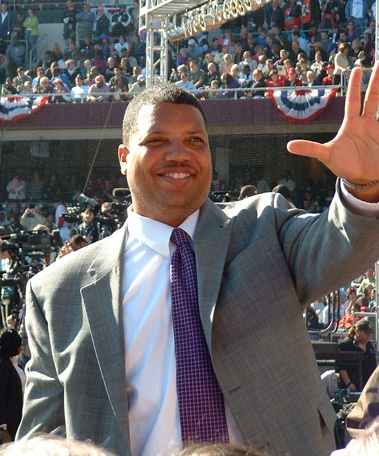
Does Widener (at left) have "the guts to tackle the tough issues facing us”?

In addition to revenue loss from this 2005 Tax Reduction Act (which also included a big reduction in business taxes), Ohio is facing a big loss in revenue to the state, because the whole economy is slowing to a recession level and Ohio’s tax revenues are slowing proportionally.  Thankfully there are budget experts who have insight to all of this and one such expert is Richard Sheridan.  He paints a gloomy picture and I write about it here: Ohio Budget Expert, Richard Sheridan: “Ohio’s Budget Problems Are A Long Way From Being Solved And One-Time Fixes Have Dried Up.”

The dramatic decrease in state revenue will mean that Ohio will be forced to make some big adjustments in its next budget. Without finding new sources of revenue, it looks the state will be forced to make a big constriction in Medicaid benefits and other social services to the needy, just at the time when the number of Ohioans facing a personal economic crisis is dramatically increasing.  Decreased revenues will mean the state will need to make big cuts in spending on education, and big cuts to local governments.

On his web-site, (which includes a video of his impressive interview with Katie Couric about his legislation concerning Ohio’s payday lending laws) Widener says, “Our next Senator must have the guts to tackle the tough issues facing us. We must reduce the burden of state government on families and small businesses; act ethically, and focus on the  people’s business.”

Reducing “the burden” of government sounds like that Widener is echoing the Republican line and seeking even additional tax cuts.  His views on taxes should be a point of discussion and explanation in this campaign.  A lot of people, particularly in time of recession, don’t see government as a burden, but see government as a source of help and assistance.  Widener’s espousing of the  Republican doctrine of small government seems greatly out of touch with the reality that many voters in the 10th Senate District face.

I’ve spoken by phone to Widener’s Democratic opponent, Roger Tackett. I’ve not met him in person, yet. Tackett is an interesting man, a Vietnam veteran who suffered injuries in the war that left him handicapped, in a wheel chair. He has managed to get elected  Clark County Commissioner, running as a Democrat in a rural area that usually votes Republican.

I’m urging Tackett to speak the truth about the state’s financial crisis and how this crisis will impact the poor, impact educational opportunities for Ohioans.  I’ve barely started to research what a reduced budget, with spending matched to Ohio’s starved revenues, might look like.  It is one thing to talk in rosy terms of making government smaller and reducing taxes, but eventually such talk bumps up against economic reality.  And reality in Ohio is getting pretty scary for a lot of Ohioans who increasingly will look to government for help.

I think Tackett, along with other Democrats seeking election to the General Assembly, should say, flat out, that if elected, he will seek to boost needed revenues to the state by rescinding the income tax cut for the wealthy.

In his TV ads, Widener brags about his role in producing the tax cuts, but he makes no mention of the recession and the fact that Ohio is facing a severe revenue crises. (Just this year, the governor has announced over $1.2 billion in budget reductions.)  The 2005 tax cuts that Widener championed and that he now brags about, in fact, amounts to a transfer of wealth from the poor and the middle class to the wealthy.  It was argued at the time that such transfer was needed to bring about greater “tax fairness” in Ohio, because, the argument goes, prior to 2005, the wealthy in Ohio were being taxed at an “unfair” rate.  The concept of what makes for “tax fairness” should be at the center of State Assembly election campaigns.

Widener, and every legislator, should be able to define what is “fair,” what is in the general good.  Policy Matters Ohio warns that the legislature may want to make up for decreasing state revenues by increasing the rate of sales tax — and this would amount to transferring more wealth from the poor to the wealthy.

“Given the looming budget deficit, the state would have to finance such a reduction through increases in other taxes, “ says Policy Matters Ohio, “Some news reports have indicated it might be paid through the sales tax. However, lower and middle income taxpayers pay a greater share of their income in sales tax than upper-income taxpayers do.”

The state needs money.  Do we raise the sales tax or the income tax and how exactly?  What is the most fair way?

This election should center on important and real questions about government, about the purpose of taxes, about government’s responsibility, about “fairness,” about the social contract. As Widener says, “Our next Senator must have the guts to tackle the tough issues facing us.” Yes.  We needs legislators with guts, but, more importantly, we need legislators who have guts and who also are guided by sound principles defining fairness, defining the role of government. It is unrealistic to think a candidate, who has shown no courage to deal with the actual issues and challenges facing Ohio in his or her campaign, will suddenly get the guts to do so after the election.

We still have a month to go in this election campaign. Candidates to the Ohio Assembly, like Widener and Tackett, should demonstrate they have the guts to level with voters.

Posted in M Bock, Opinion | Leave a comment